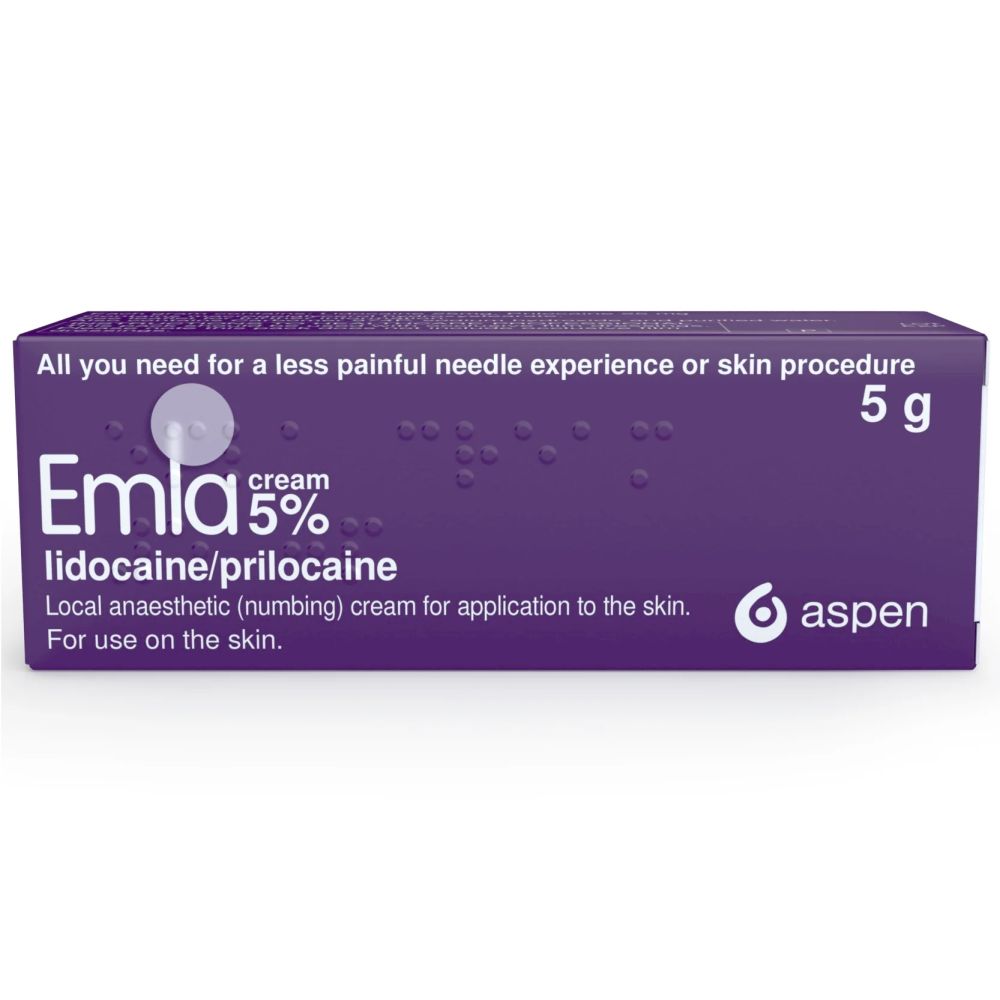
Emla 5% Cream 5g Lidocaine/Prilocaine Numbing Cream

What is EMLA cream 5%?
EMLA Cream is an anaesthetic cream that can be used to numb areas of skin before injections or minor procedures. It can be used by both adults and children and is perfect for kids who are scared of needles and need a way to reduce pain when they have an injection.
How does EMLA Cream 5% work to numb my skin?
EMLA Cream contains two local anaesthetics, lidocaine and prilocaine, which both works to numb the surface of the skin. When this happens, you won’t be able to feel pain, but may still be able to feel pressure and touch, making this perfect for minor procedures or injections. You’ll typically apply a layer of this cream an hour before your procedure (although this can differ depending on your age or condition) and leave it in place, giving it enough time to get to work and numb your skin effectively before you wipe it away.
How long does this anaesthetic last?
When you’ve applied EMLA cream as recommended by the manufacturer or your doctor or pharmacist, your skin will remain numb for around 2 hours. This should be more than enough time to carry out minor procedures or for injection.
Can I use this cream if I’m taking other medication?
If you are using any other medication, including medications you obtained without a prescription and herbal medicines, you should speak to your doctor or pharmacist before using this product. This particularly applies to:
- Sulphonamides, which are used to treat infections, and nitrofurantoin, which is used for urinary tract infections, cystitis, and kidney infections
- Phenobarbital and phenytoin, which are used to treat epilepsy
- Other local anaesthetics
- Medicines used to treat an uneven heartbeat, e.g. amiodarone
- Cimetidine or beta-blockers, these can cause an increase of the blood levels of lidocaine
How to use this numbing cream
Apply the EMLA cream to the area of skin you wish to numb, squeezing it from the tube into a mound. Do not rub the cream in. Remove dressing from its backing papers, leaving a frame of paper around the outside. Gently place the dressing over the mound of the cream adhesive side down, without spreading the cream under the dressing. Remove the final piece of backing paper and smooth down the edges of the dressing. Leave in place for 60 minutes, letting your doctor or nurse remove the dressing just before they carry out your medical procedure.
What is the usual dose of EMLA Cream
The usual amount of EMLA cream you will need to use will differ depending on your age. Adults will typically need to use 2g (half a 5g tube) of EMLA cream before a small procedure, but you should speak to your doctor or pharmacist before using this product so you can be sure that you’re using the right dose for you.

What is EMLA cream 5%?
EMLA Cream is an anaesthetic cream that can be used to numb areas of skin before injections or minor procedures. It can be used by both adults and children and is perfect for kids who are scared of needles and need a way to reduce pain when they have an injection.
How does EMLA Cream 5% work to numb my skin?
EMLA Cream contains two local anaesthetics, lidocaine and prilocaine, which both works to numb the surface of the skin. When this happens, you won’t be able to feel pain, but may still be able to feel pressure and touch, making this perfect for minor procedures or injections. You’ll typically apply a layer of this cream an hour before your procedure (although this can differ depending on your age or condition) and leave it in place, giving it enough time to get to work and numb your skin effectively before you wipe it away.
How long does this anaesthetic last?
When you’ve applied EMLA cream as recommended by the manufacturer or your doctor or pharmacist, your skin will remain numb for around 2 hours. This should be more than enough time to carry out minor procedures or for injection.
Can I use this cream if I’m taking other medication?
If you are using any other medication, including medications you obtained without a prescription and herbal medicines, you should speak to your doctor or pharmacist before using this product. This particularly applies to:
- Sulphonamides, which are used to treat infections, and nitrofurantoin, which is used for urinary tract infections, cystitis, and kidney infections
- Phenobarbital and phenytoin, which are used to treat epilepsy
- Other local anaesthetics
- Medicines used to treat an uneven heartbeat, e.g. amiodarone
- Cimetidine or beta-blockers, these can cause an increase of the blood levels of lidocaine
How to use this numbing cream
Apply the EMLA cream to the area of skin you wish to numb, squeezing it from the tube into a mound. Do not rub the cream in. Remove dressing from its backing papers, leaving a frame of paper around the outside. Gently place the dressing over the mound of the cream adhesive side down, without spreading the cream under the dressing. Remove the final piece of backing paper and smooth down the edges of the dressing. Leave in place for 60 minutes, letting your doctor or nurse remove the dressing just before they carry out your medical procedure.
What is the usual dose of EMLA Cream
The usual amount of EMLA cream you will need to use will differ depending on your age. Adults will typically need to use 2g (half a 5g tube) of EMLA cream before a small procedure, but you should speak to your doctor or pharmacist before using this product so you can be sure that you’re using the right dose for you.
Any Questions?
We have answers.
Got a question? Our FAQs cover everything from registration to prescriptions, making it easy to find the answers you need—fast.
Talk to us